Virgina Woolf, all the way.
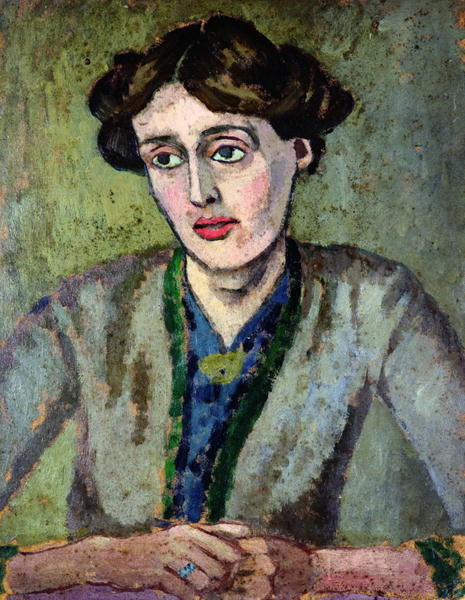
Like many women writers, I hold Virginia Woolf in high esteem, she is a role model, a mentor and a literary Godmother.
She has a unique voice, which I like to liken with the comforting tidings of Fall-Autumn.
A woman so brilliant and gifted, and yet, what mostly gets talked about is her decision to end life on her own terms, her brilliance gets eclipsed by her ‘neurosis’ and her suicide.
What I call the sensationalism of suicide and mental illness, a monster so big it forces you overlook the versatility of someone’s existence and only dwell on their tragic demise.
And, since women writers were as commonplace as divers in the Dead sea, staunch feminist voices such as Virginia Woolf and Sylvia Plath shine a steady light on the morale of scores of women even today.
Virginia Woolf, in her 1929 publication, A room of one’s own noted, “A woman must have money and a room of her own if she is to write fiction.” She went on to highlight the many barriers women faced in her time in doing what men could do without the same barriers. She introduced Judith Shakespeare, William Shakespear’s sister to elaborate how a woman with Shakespeare’s gifts would have been kept from the many opportunities to develop them. Like Woolf, who stayed at home while her brothers went off to school, Judith is trapped in the home: “She was as adventurous, as imaginative, as agog to see the world as he was. But she was not sent to school.
And these issues have bled into the future, in the times of high speed internet, globalization and equitable consumerism, women still fight the barriers of a visible yet indestructible institutionalized patriarchy and unabated violence in the form of rape and acid attacks, so their work is still relevant.
So, I would like to meet her and congratulate her for creating such distinguished and relevant works of Literature and pick her brains, if she permits, on how to continue to fight the good fight- the feminist fight.
Lastly, I would also like to ask her about her early life in Bengal and her experiences living in the colonial Bengal.
 Fingers in symphony