Once you are down the rabbit hole of jamming with books, you would realize you can find almost everything under the Sun to write about ( mentioned the Sun because there’s an ongoing controversy around copyrighting the usage of Sun in fiction writing). I see you are already rolling the eyes, but if you want to know more about it, I’ve already linked it to a site with all the deets, you’re welcome.
Now, about harmless discussions around book, this week I revisited the Hindustani literature in my library to bring you the most profound fiction writing from some of my favorites, you may know about some of these writers or may not, but I urge you to go check out their works ( most have been translated in English) because they are the bravest brand of writers I have ever come across…
So, there they go….
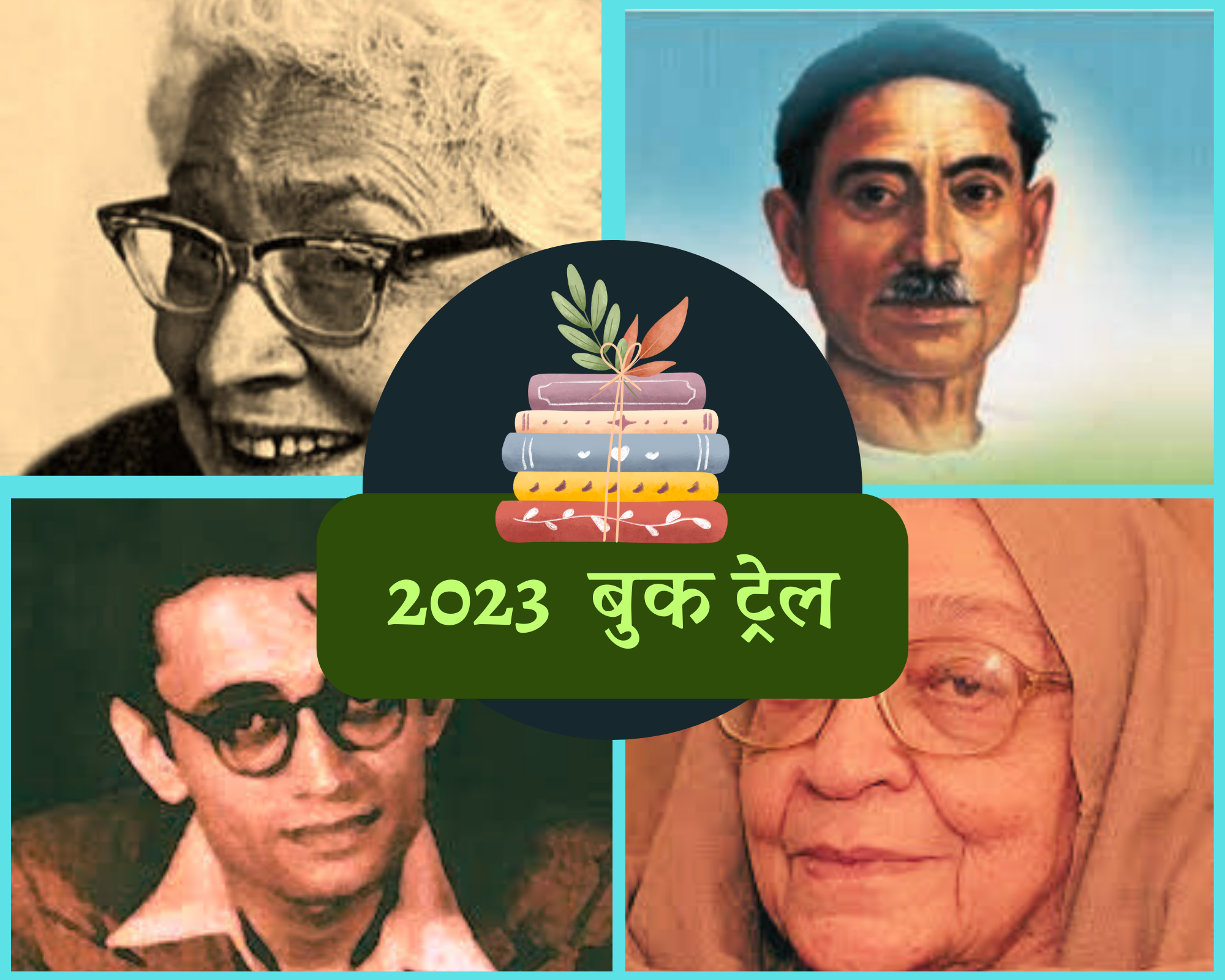
- Nirmala ( The second wife) by Munshi Premchand- Munshi Premchand is a celebrated Hindustani novelist and reformist writer from the pre-independence Indian era . He has written over a dozen novels, over 300 short stories and essays focused on culture, religion and economical conditions in India. His novel Idgah was my childhood favorite, but it was Nirmala who I discovered late into my adulthood during Jashn-e-Rekhta, and that was the beginning of my foray into Hindustani literature. Nirmala depicts the journey of a child bride Nirmala and her journey from as a 15 year old who is married to a widower lawyer who is the same age as her late father. She is married without a dowry and therefore, her husband is considered Godlike. She understandably feels no attraction to him and considers marriage as a duty she must perform. Totaram treats her with respect and gives her free reign over his finances at first but is soon imprisoned by patriarchal social mores that regarded women as subservient to men. He starts mistreating her and it results in successive tragedies in his life.
- Ismat Chugtai- Lihaaf ( Short Story), Tedhi Lakeer( Novel)- I don’t know if I existed in Ismat Chugtai’s timeline, but if I did, I hope I was at least a fly on the wall on her and Manto’s wall. Just to tell you how entertaining she was, she wrote about a Begum and her maid who were embroiled in a forbidden but tempest affair in her short story ‘Lihaaf’ which was published in the year 1942, when India was still under the British rule. Obviously, for us to read such a story, would perhaps be no big deal, but even if you read it today, the way their foreplay has been captured through the P.O.V. of the narrator, would be enough to have your cheeks feel flushed. The story resulted in widespread outrage and she had to face the full wrath of the then Victorian court, more so, because she as a woman had written what was termed as an ‘obscene novel’. If you want to know more about the trial, this article captures it poignantly. On to her works, Ismat was known for keeping women’s desires as her central theme, her writing was widely imaginative and toying, two gifts that she used to the brim for drawing the attention of the reader’s towards various feminist issues. In Tedhi Lakeer her first novel, she pulled us into the lives of Muslim households in North India living at the times of partition. I do realize I have written probably a whole article about her, and I can go on about another 5 pages but this in no means indicate that I respect the other authors here any less, it only shows that I am just an Ismat Chugtai simp.
- Khol Do and Toba Tek Singh by Sadat Hassan Manto: Manto as a writer was just as fiery as in real life, some say he was as real as real can be. Manto and Ismat were great friends and confidantes and also braved a court summon together for incendiary writing( I am sure they would approve of me being on a first name basis with them). Manto was forced to choose Pakistan a little after partition ( our loss) and he remained heartbroken over it. He captured his anguish in his short story Toba Tek Singh through the plight of a group of clinically insane inmates grasping with the fear of rootlessness with the sudden division of their motherland. The asylum is located in Toba Tek Singh, Pakistan and the Indian and Pakistan governments are planning an inmate exchange, the inmates are baffled by this and their mental health worsens. While Toba Tek Singh reads more like satire, it is his writings on gender based violence during acts of war exposing the worst of mankind that make him my favorite . Khol Do is much darker and highlights the plight of women refugees during the India-Pakistan partition ( it is triggering and therefore I would request you to read with caution)
- Krishna Sobti- Mitro Marjani, loud insatiable women who won’t accept anything less than unbridled happiness. Mitro is the wife of a man with an undiscovered libido in a large undivided family. Disatisfied by her husband, she doesn’t mince her words and teases him endlessly. Please, let me remind you, we’re talking about the time when women showing anything even remotely akin to desire were brandished as ‘loose character’ or a prostitutes, so here’s a woman who is not ashamed of talking about her desires. We need more women like that even today, to be honest.
So, why write a long..issh post on writers from the yesteryears. Well, because a writer’s job is a lonely one, you are often more comfortable just writing down your thoughts rather than talking to someone about it( unless it’s your therapist in which case you should spill all) and sometimes you are not sure about what you are writing( who am I kidding, it’s mostly) you need an outside perspective: a friend, a guide or a mentor, writers who bled ink, sweat and sometimes even blood for their craft and their readers. The went against the norm, broke rules, took risks and immortalized their lives in the process.
Here’s to more such brave writers…….
 Fingers in symphony