

That someone is no longer with us, but their stories of courage, valor, and compassion will never cease to be.
Her name was Savitribai Phule, a woman from the Dalit caste in India, a community historically marginalized and oppressed.
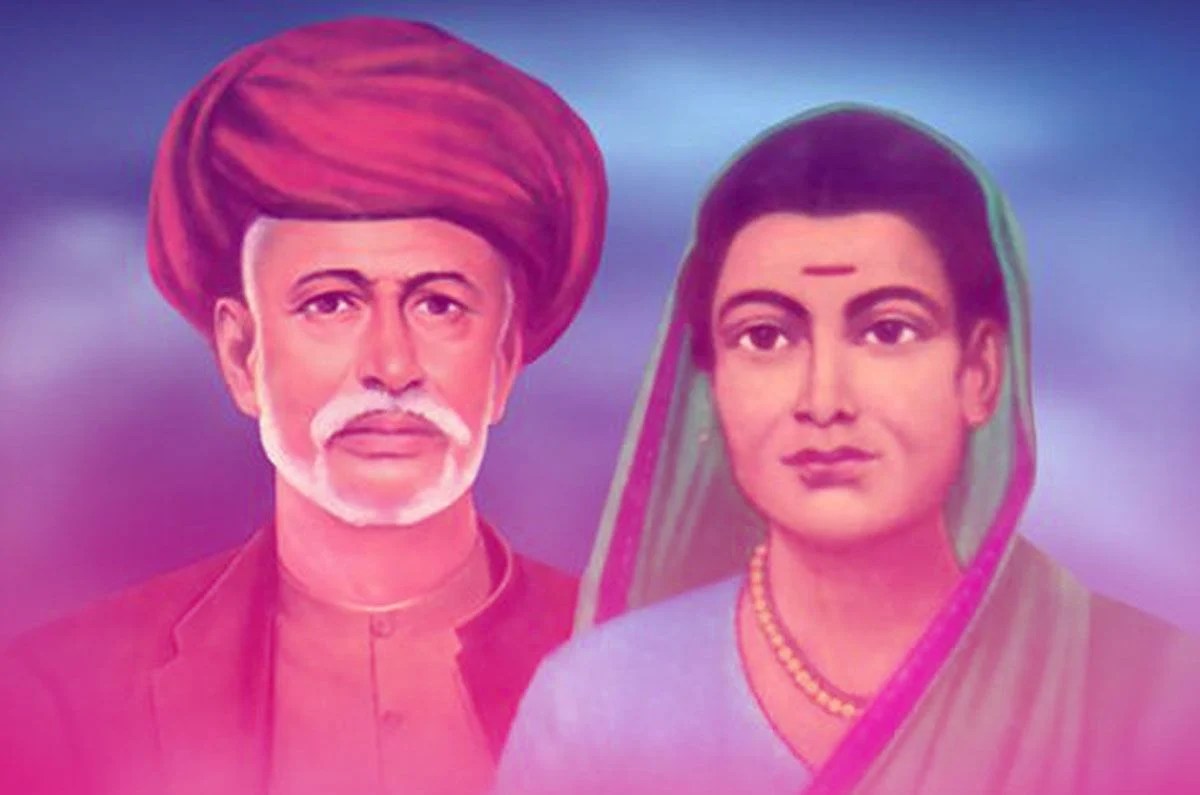
Born in 1831, over a century before India’s independence from British rule, Savitribai was married to Jyotiba Phule at the age of nine, while he was thirteen. Early marriages were the norm then.
Jyotiba was a visionary from a young age, and he vowed to educate his bride; he began teaching Savitri along with his cousins.
Thus, a hunger for education was ignited-one that would consume the couple and lead them into a life of relentless activism.
After completing their higher education, the couple decided to run a school for children from marginalized communities. This became a thorn in the side of the upper-caste elite, primarily Brahmins, who issued dire threats if they continued teaching girls.
Even their own families opposed the idea, and their community faced immense pressure to ostracize them. Eventually, they relocated to the home of Jyotiba’s friend, Usman Sheikh, from where they expanded their efforts.
While both Jyotiba and Savitri faced continuous opposition from Brahmins, Savitribai was physically threatened and attacked with dung.
But it was her determination, along with her husband’s unwavering support, that led her to complete a professional teacher’s training course. She was joined by Faatima Sheikh, Usman Sheikh’s sister. Together, they became the first Indian women to be formally certified as teachers.
Their teaching methods soon outshone those of government schools; in fact, the number of girls enrolled in their schools began to surpass the number of boys in government-run institutions.
The Phules, along with their close friend Sadashiv Ballal Govande, also established the Balhatya Pratibandhak Griha (Infanticide Prevention Centre), mainly to support pregnant widows—a group doubly stigmatized in society.
Savitribai continued her life of service until her death from the bubonic plague, contracted while caring for patients in a clinic she had opened.
Her story pierces my heart, and also gives me courage. I can’t begin to imagine the sacrifices made by women like Savitribai Phule, Fatima Sheikh, and Margaret Fuller to make education for women a reality.
This was a global struggle, with only a few exceptions, which proves how patriarchal powers have always feared women’s independence.
Savitribai’s story is like scripture to me; something I revisit when I feel low or unmotivated.
The freedom I now take for granted came at a heavy price. Remembering it is a form of honoring it.
 Fingers in symphony